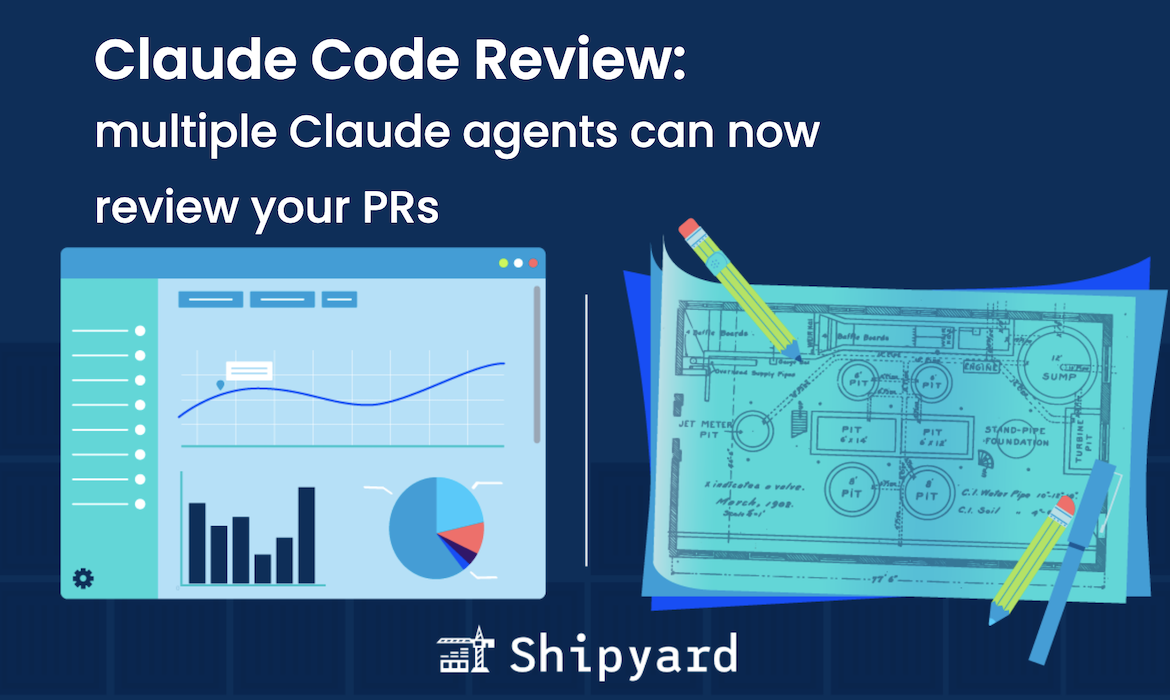
One of the toughest bottlenecks for agent-written code is the code review stage. Many senior devs spend more time reviewing code than they do writing it, and up until now, there wasn’t a single “standard” way to get agents to review code. However, there already are some offerings out there that handle it for you.
Claude’s Code Review makes sense: CC can already do just about everything else related to software development, and code review has been a missing yet super important piece. Code Review lets Claude Code orchestrate a series of agents to review and debug PRs.
How does Claude Code Review work?
When you open a PR, Claude sends a series of agents to examine the diff. They’ll check each finding to reduce false positives. Larger PRs will reviewed more thoroughly. After the review runs, users will get a list of issues ranked by severity, as well as inline comments.
Claude Code Review vs. Qodo and Coderabbit
Qodo and CodeRabbit are the two market-leading AI code reviewers. At Claude’s current price, both options are much more affordable (they’re both billed at $30/user/mo).
Until Claude Code Review is included with the Claude subscription plans, users are better off choosing one of these.
Qodo, like Claude Code, uses multiple specialized agents. Its standout feature is the rule system: it captures your org’s coding standards from your codebase and PR history, and uses that to guide its code review standards. It uses your full repo context to review (while CC analyzes only at the diff level), which helps it review code at your team’s standard.
Coderabbit learns from your feedback, applying learnings to any future reviews. It also lets you execute one-click fixes directly in the PR. Coderabbit can connect to Jira or Linear to make sure the changes meet requirements. There’s a chat feature, where you can ask questions or make requests within a PR.
Claude Code Review is easy to onboard with zero config, so when enabled, it runs against every PR. There aren’t any integration or customization options. It costs approximately $15-25/PR in API tokens, but will likely be included with Pro or Max plans pretty soon. And as with any Claude Code feature, it’s certain that it’ll change quite a bit when Anthropic reads user feedback.
Who’s this for?
Claude Code Review is still in research preview, so teams must be willing to pay a premium for PR review. If you’re not using a PR-based workflow on GitHub, CC Review won’t work for your setup. Otherwise, it’s a strong starting point for teams that don’t have AI code reviews set up, and runs out of the box without a config component. Also, the Claude models are often praised for being the “smartest” with respect to code comprehension, so if your team has a strong preference there then that’s worth considering.
If that isn’t you now, watch this space. CC Review will likely be pretty different in a few months. In the meantime, CodeRabbit and Qodo have more features at a much better value.
Environments for review
If you’re pushing a high-volume of agent-written code, you’re probably aware that static code review is only one piece of the puzzle. With review environments, agents can run tests against their code and check their features live. If you want environments that your agents can use on their own, Shipyard offers a CLI and an MCP. Agents can push code, get environment links, visit environments, run tests, etc.
Try it free for 30 days, you might even see your PR bottleneck dissolve.